
THERMAL INSULATION · FASTENING SYSTEMS
INSULATION
FIXINGS.
Fixings for securing thermal insulation boards to facade substrates. Explore the product design, applications and technical dimensions.
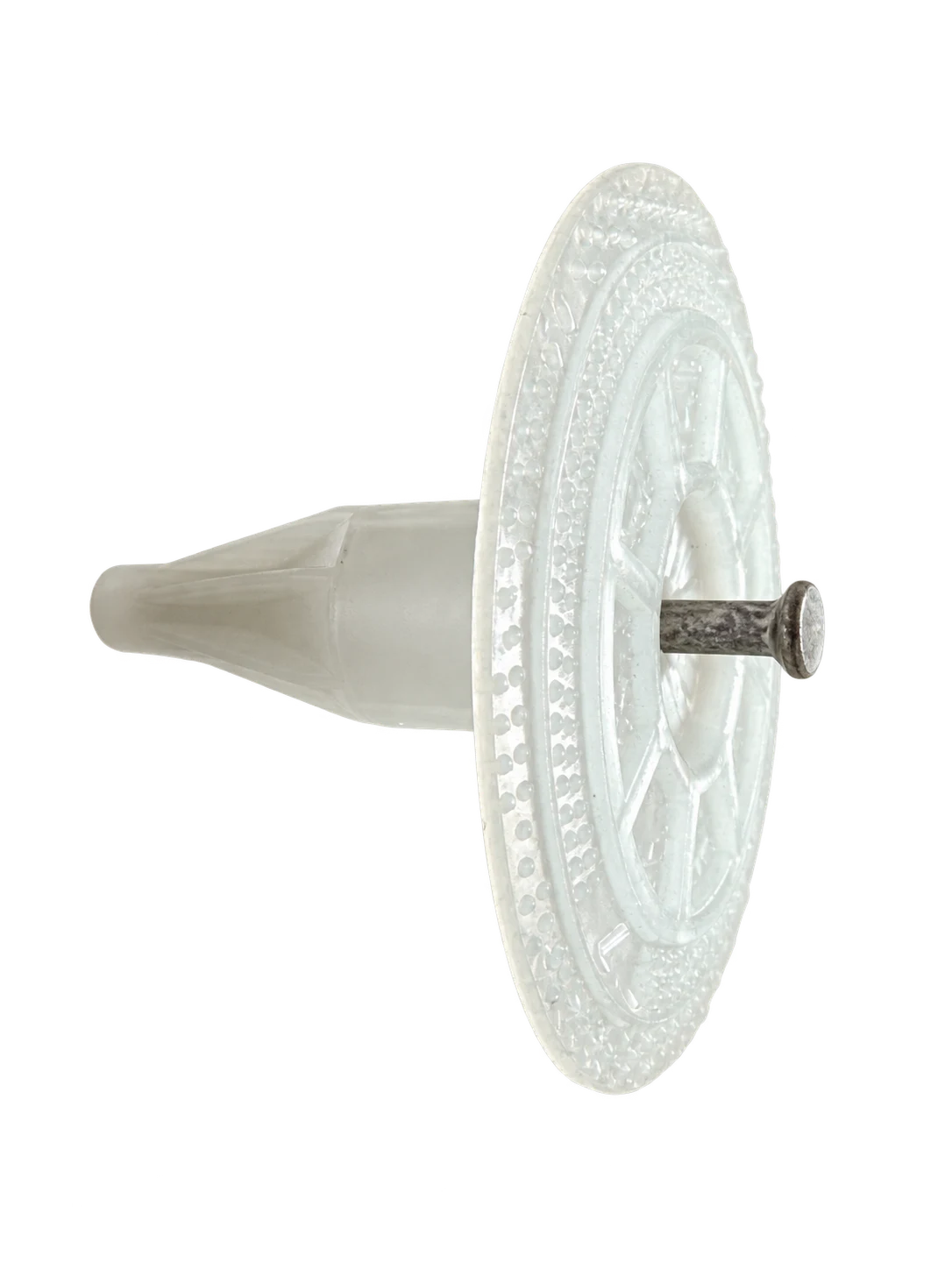
TECHNICAL DIMENSIONS.
← Scroll sideways to view the table →
| Product Code | D (mm) | Length (mm) | Tip Type |
|---|---|---|---|
| TM1030 | 3.1 | 30 | balistic&stepped |
| TM1040 | 3.1 | 40 | balistic&stepped |
| TM1050 | 3.1 | 50 | balistic&stepped |
| TM1060 | 3.1 | 60 | balistic&stepped |
| TM1080 | 3.1 | 80 | balistic&stepped |
| TM1010 | 3.1 | 100 | balistic&stepped |
Features
- Wide head: Helps limit surface deformation of insulation boards
- High-strength nail shank: Secure, durable fastening
- Design intended to reduce thermal bridging and support energy efficiency
- Corrosion-resistant construction: Suitable for facade applications
- Quick, straightforward installation: Time and labour savings
Applications
- External wall insulation applications
- EPS, XPS and mineral wool insulation boards
- Concrete, brick and aerated concrete substrates
- New-build and renovation projects
Benefits
- High pull-out resistance and grip
- Durable, reliable fixing
- Design supporting thermal insulation performance
- Professional installation in accordance with applicable standards
INSULATION ANCHOR & STEEL PIN.
The insulation fixing consists of a plastic anchor and a steel pin. For mechanical fixing of insulation boards, consider the anchor size, board thickness and substrate together.
Check the product code and dimensions in the technical table before ordering. The number and layout of fixings must be determined according to the insulation system and project specifications.
FREQUENTLY ASKED QUESTIONS.
What are insulation fixings used for?
They combine an anchor and steel pin for mechanically securing thermal insulation boards. Select the product with regard to the substrate and insulation system.
How do I select the steel pin size?
Review the pin options in the technical dimensions table. Seek technical advice based on the substrate, board thickness and system requirements; pin length alone does not establish suitability for an entire application.